

Love Is Risk
Loving, wanting, art-making as articles of faith

Thank you for all your great messages about my Yesteryear review! For everyone wanting to write more and feel less afraid doing it, here’s a free (and funny) writing exercise!
And to the (nearly 100!) of you who’ve become paid subscribers: thank you for supporting the work I do here! There’s a little something for you at the end of this essay :)
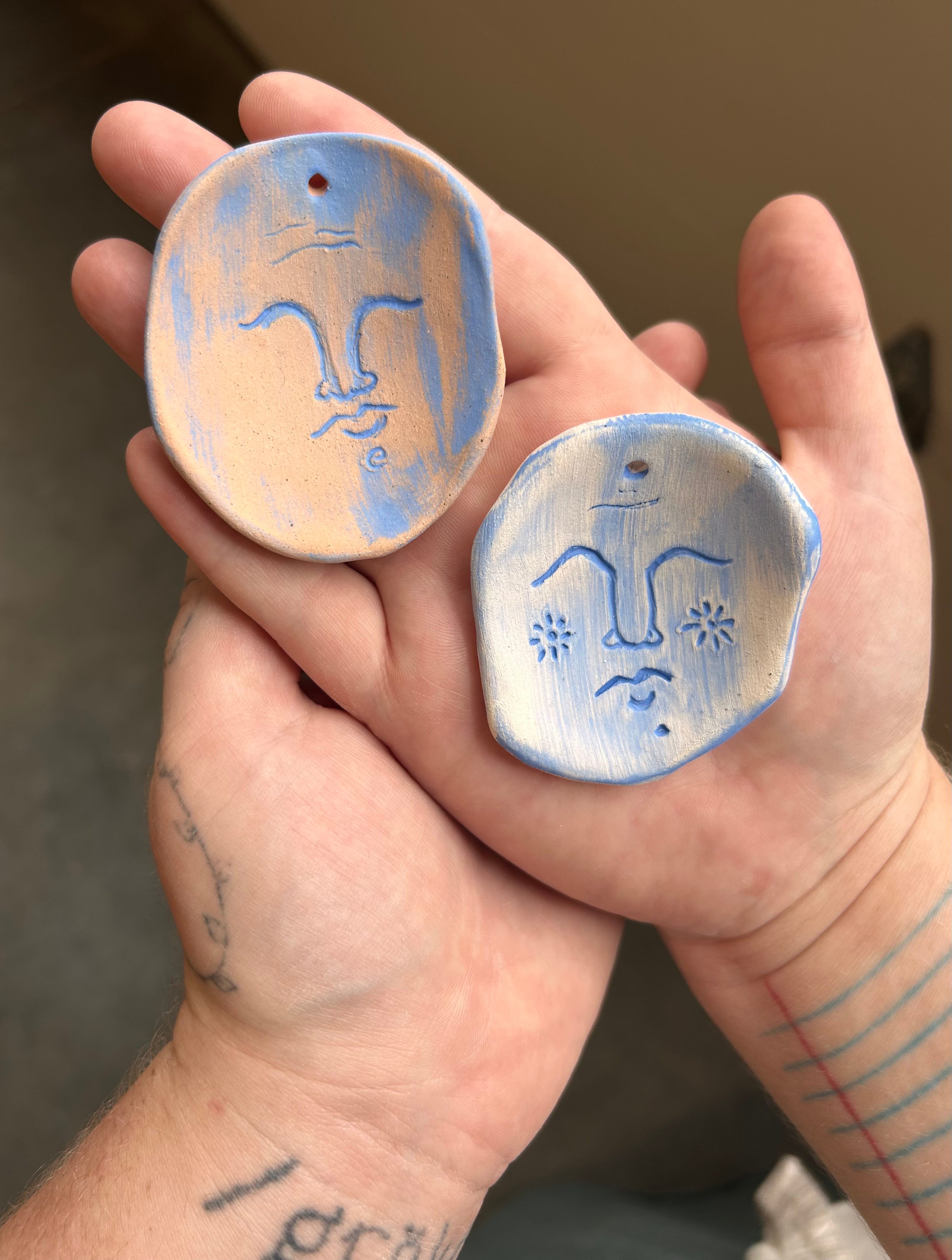
I was asked to elaborate on the “external flames of ardor” in this essay, and whether they exist internally. Here’s my answer:
Love Is Risk
There was a time when writing looked very different for me. Pre-professional, pre-identity. I was known as a writer insofar as the other kids at school knew that “Rebekah likes to write,” and my writing was a “discipline” because it took discipline to finish a story: a combination of endurance (sitting down to my notebook or a Word document for a long time) and inspiration, this weird magical other thing that was the reason I kept feeling moved to do any of this in the first place.
As I got older and the stories got longer, I learned to titrate the endurance and inspiration together very carefully or risk letting one overpower the other. The inspiration hadn’t vanished, but it was growing up. Things interested me that hadn’t before. Once, it had been enough to write about a very sad dog who would not come out of the forest because she couldn’t stop crying. Now that dog was me, the forest was an empty shop classroom in my high school, and the crying felt both irrational and urgent, like something transformative that had to be gotten through before the day could end. How had it transformed me? It seemed the only way to understand was by writing about it.
Eventually it wasn’t me being transformed but me observing a character being transformed, a sad kid keening among abandoned table saws as seen from above. I was not that kid – I was a twenty-five-year-old, an actual adult with degrees and a manuscript, well on my way to what I hoped was broad public acceptance. My stories had gotten so much more complex, the inspiration galvanizing me to tell them intensified, but now there were all these other things that had to be managed. A new fork in the road every few paces: Did I really plan to make this work as a career? Given that I don’t come from generational wealth, was I willing to accept the fundamental instability involved in that choice? Did I understand that bringing dependents into this situation would be potentially dangerous? Did I understand that I was entering an Industry with a set of preferences, and that the Industry was much more powerful than I’d ever be?
Sign on enough dotted lines and you really start to forget what motivated you to do any of this in the first place. It feels precious, in the midst of eking out a living, watching contracts dry up or books fall out of print, to wonder how inspiration lured that girl normally so distracted by her Eyewitness Science books and whining Tamagatchi back, again and again, to the page. It feels just as precious during the peaks of success, too. Who cares what made me want to write when I was eleven? All that matters right now is riding this wave!
You’re up, and you never know if you’ll be up again. You’re down, and you never know if you’ll be up again. It felt just like being in love.
By the time the pandemic rolled around, I had even less desire to understand love than I did to understand my little girl-self and her Word documents full of sad forest dogs. I’d been a twentysomething with zero game, disastrously unsuccessful at wooing my handful of crushes both female and male. I’d resorted to swiping on apps, matching with dudes and the occasional butch, and getting burned by them all. When I graduated from that, it was into an attitude of skeptical indifference. What had I been searching for, anyway? It’s not like love was working for anyone else I knew.
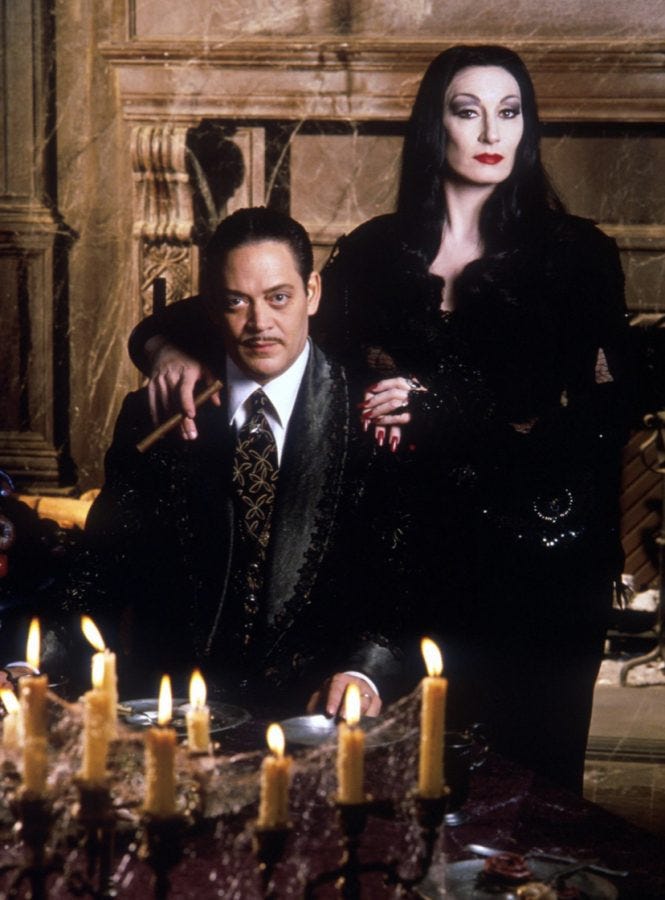
As far as true love stories went, I knew of Gomez and Morticia Addams. Everyone else seemed to be wading through quagmires of projection and self-destruction and anxious attachment. Paranoia and secret-keeping and humiliation and disappointment. It was happening in real life and in fiction and in real-life fiction (otherwise known as reality TV).
During the lonely, touchless height of the pandemic, an older friend1 was surprised I’d deemed myself so unlucky in love as to be skeptical about the reality of love altogether. She scheduled a Zoom pep talk with me.
As far as true love stories went, I knew of Gomez and Morticia Addams. Everyone else seemed to be wading through quagmires of projection and self-destruction and anxious attachment.
“I’ve started to realize it’s all a great big compromise,” she told me through my laptop screen. “There’s this person you care about deeply, and you’ve made a pact with them to go through life together, to stand by each other through the ups and downs, to be for each other what you need each other to be. Humans are weird: we’re like the stock market. One day your value could be way up with your partner, and the next day it could be down lower than you’d ever imagine. But what matters is the constancy of the bond you two have. That’s what love is.”
I was moved by this speech, and thanked her, and slept soundly after we hung up. I awoke the next morning and time progressed. Love kept feeling as inconstant and unstable as art-making until suddenly it didn’t. And that’s when I realized my friend had been dead wrong.
Keep reading with a 7-day free trial
Subscribe to The Cosmic Cheeto to keep reading this post and get 7 days of free access to the full post archives.